About the Journal
Journal of Language Education and Literacy (JLEL) is a peer-reviewed, open-access scholarly journal published by the Language Education and Literacy Research Group (LELRG) under the auspices of the Institute for Research and Community Service (LPPM), Universitas Negeri Padang, Indonesia.
JLEL provides an academic platform for researchers, scholars, educators, and practitioners to disseminate original research and scholarly work in the fields of language education, literacy studies, and applied linguistics. The journal promotes scholarly dialogue and the exchange of research-based knowledge across diverse educational, linguistic, cultural, and geographical contexts.
The journal publishes scholarly work that contributes to the advancement of theory, research, policy, and practice and demonstrates clear theoretical, methodological, educational, or practical contributions to the field.
Journal Information
-
Journal Title: Journal of Language Education and Literacy
-
Abbreviation: JLEL
-
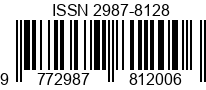
Print ISSN: 2987-8128
-
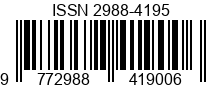
Online ISSN: 2988-4195
-
Publisher: Language Education and Literacy Research Group (LELRG), under the auspices of the Institute for Research and Community Service (LPPM), Universitas Negeri Padang, Indonesia
-
Editor-in-Chief: Dr. Ayu Gustia Ningsih, M.Pd.
-
Publication Frequency: Quarterly (February, May, August, and November)
-
Peer Review: Double-blind peer review by at least two independent reviewers
-
Publication Language: English
-
Access Model: Immediate Open Access
-
License: Creative Commons Attribution-NonCommercial-ShareAlike 4.0 International (CC BY-NC-SA 4.0)
-
Submission Fee: No charge
-
Article Processing Charge (APC): No charge
Focus and Scope
JLEL publishes scholarly work addressing contemporary issues, developments, and innovations in language education, literacy studies, and applied linguistics.
The journal's areas of interest include, but are not limited to:
-
Language teaching and learning methodologies;
-
Second and foreign language acquisition;
-
Literacy development and literacy education;
-
Reading and writing instruction;
-
Digital, multimodal, and emerging literacies;
-
Language assessment and evaluation;
-
Language curriculum and materials development;
-
Technology-enhanced language learning, computer-assisted language learning (CALL), and digital learning environments;
-
Language policy and planning;
-
Multilingualism and multilingual education;
-
Language teacher education and professional development;
-
Teacher identity, beliefs, and classroom practices; and
-
Emerging issues relevant to language education, literacy studies, and applied linguistics.
JLEL publishes:
-
Original Research Articles — empirical studies presenting original research findings and a clear scholarly contribution;
-
Conceptual or Theoretical Papers — scholarly papers that critically develop, examine, or synthesize concepts, theories, models, or perspectives relevant to the journal's scope; and
-
Systematic Literature Reviews — methodologically transparent reviews that systematically identify, evaluate, and synthesize relevant scholarly literature.
All submissions must fall within the journal's Focus and Scope and demonstrate a clear scholarly contribution.
Peer Review and Editorial Decision
All submissions undergo initial editorial screening for relevance to the journal's scope, scholarly quality, originality, ethical compliance, and conformity with submission requirements.
Manuscripts that pass the initial screening undergo double-blind peer review by at least two independent reviewers with relevant expertise. Reviewer recommendations inform but do not automatically determine the editorial decision.
The final editorial decision is made by the Editor-in-Chief or an authorized handling editor in accordance with the journal's editorial policies, scholarly standards, reviewer reports, and relevant ethical considerations.
Detailed procedures are provided in the Peer Review Process.
Publication Ethics and Research Integrity
JLEL is committed to maintaining integrity, transparency, fairness, and accountability in scholarly publishing. The journal maintains policies addressing authorship and contributorship, conflicts of interest, research involving human participants, informed consent, plagiarism and inappropriate textual reuse, duplicate publication, data fabrication and falsification, citation manipulation, artificial intelligence and AI-assisted technologies, peer-review confidentiality, corrections and retractions, complaints and appeals, and the responsibilities of authors, reviewers, and editors.
Similarity-detection software, including Turnitin, may be used as a screening tool. A numerical similarity score alone does not constitute a determination of plagiarism. Identified textual overlap is evaluated according to its nature, source, extent, significance, and context.
Detailed requirements and procedures are provided in the Publication Ethics and Malpractice Statement and Plagiarism and Similarity Screening Policy.
Open Access, Copyright, and Licensing
JLEL provides immediate open access to all published scholarly content. Articles are freely accessible online immediately upon publication without subscription fees, access charges, registration requirements, or embargo periods.
Authors retain copyright in their published work and grant JLEL the right of first publication.
Articles published in JLEL are licensed under the Creative Commons Attribution-NonCommercial-ShareAlike 4.0 International License (CC BY-NC-SA 4.0). The license permits users to share and adapt published material provided that appropriate attribution is given, the use is non-commercial, and adaptations are distributed under the same license.
Detailed terms are provided in the Open Access Policy and Copyright and Licensing Policy.
Publication Charges
JLEL does not charge submission fees or Article Processing Charges (APCs). There are no fees for manuscript submission, editorial processing, peer review, or publication of accepted articles.
Publication charges have no influence on editorial decisions. Manuscripts are evaluated solely in accordance with the journal's scholarly, editorial, peer-review, and ethical requirements.
Detailed information is provided in the Publication Charges Policy.
Digital Identification, Discoverability, and Preservation
Each scholarly article published in JLEL is assigned a unique Digital Object Identifier (DOI) to support persistent identification, citation, linking, and access to the scholarly record.
JLEL uses Open Journal Systems (OJS) for its editorial and publishing processes and supports scholarly metadata interoperability through established mechanisms, including the Open Archives Initiative Protocol for Metadata Harvesting (OAI-PMH).
The journal is committed to the long-term accessibility and preservation of its published scholarly content through digital archiving, backup, and appropriate self-archiving practices.
Detailed information is provided in the Archiving and Digital Preservation Policy.
Editorial Independence
Editorial decisions are made independently by the Editor-in-Chief and Editorial Board in accordance with JLEL's editorial policies, peer-review procedures, scholarly standards, and publication ethics.
Institutional, commercial, financial, personal, or other inappropriate interests must not influence manuscript selection, peer review, acceptance, rejection, or other editorial decisions. The publisher and supporting institution respect the editorial independence of the journal.
Institutional Support and Sponsorship
JLEL is institutionally supported by the Language Education and Literacy Research Group (LELRG) and Universitas Negeri Padang in its administration, operation, and development.
JLEL does not currently receive sponsorship from commercial organizations or other external sponsors. Institutional support does not influence editorial decisions or the outcomes of the peer-review process.